



With a world as epic as Middle-earth, it takes a lot to bring that scale and story to the table. Thankfully, we have an expert on the team with decades of experience! Stephen Baker is our resident plastic and manufacturing wizard so we caught up with him to ask a few questions about the development of this epic restoration.
—
The Lord of the Rings™: The King's Gambit is set in one of the most famous fantasy worlds: Middle-earth. What excites you the most about sharing this world with players?
I’m really excited that we’re bringing Middle-earth to life through the dimensionality and the huge scope of the game. The gameplay brings different aspects of that epic final battle in the story and the minis and terrain really help to make that feel real and immersive to the player.
What do you hope players feel when they see the game all set up on a table?
I hope the three-dimensionality and the scale of the game board will really help players immerse themselves in the story and feel the epic and climactic state of this great battle.
Speaking of the three-dimensional pieces, how did you decide how to present the dimensionality for the boards?
The initial challenge was trying to think through exactly what to make dimensional. Obviously Minas Tirith was going to have to be dimensional because it’s such a key area where the players battle. Mount Doom was planned to be more of a track so there was a question mark at first of if it needed to be three-dimensional, but the team quickly aligned behind the need for balance on both sides. If we were having a three-dimensional Minas Tirith, we needed a three-dimensional Mount Doom as well.
Beyond that, it was really about navigating the fact that it needs to look cool, but it also needs to be quick to set up. It needs to be quick to put away. And it needs to be stored simply in the box. Navigating all those different requirements was what took the most time in the initial design.
What was that development process like?
So to begin with I kitbashed a whole bunch of small card models. Before I dealt with the design at scale, I really explored the form using a number of smaller scaled models just to try and better understand the dimensionality and the different ways to approach the form factor. We knew that Minas Tirith has multiple layers so those needed to be playable, or at least three of them needed to be playable. So at the beginning, I was trying to get a sense of how to scale things and get a good understanding of the whole geometry of the shapes.
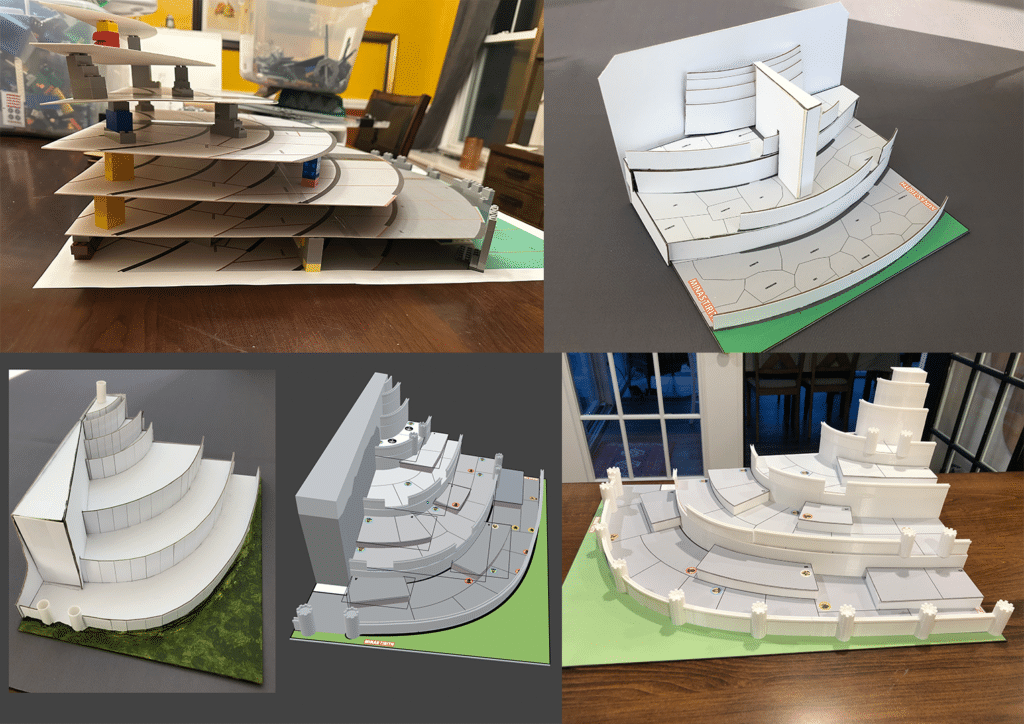
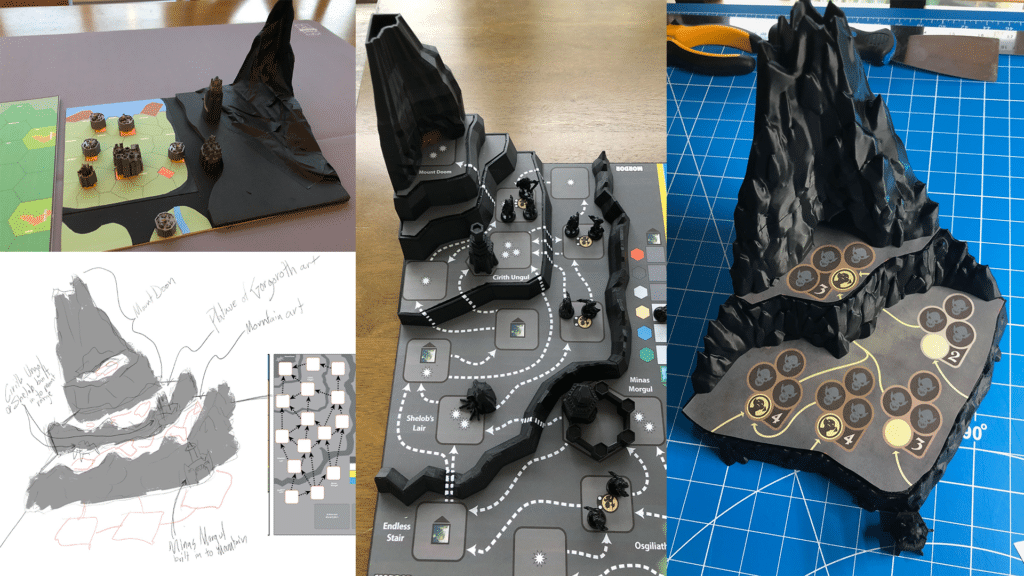
Prototype Components. Not final art
What’s the journey from concept art to final plastic piece like?
It’s a lot of iteration. It starts out with those small card models. You then migrate to some initial plastic models. I 3D print everything. You think you’ve thought through everything so you print it and put it together and then you realize that certain things just don’t work. There isn’t enough space for the miniatures or there isn’t a good way to manufacture that part with cost efficient tooling. But you learn that as you go. So you’re constantly iterating to improve the functionality but also to improve the manufacturing plan for design optimization.
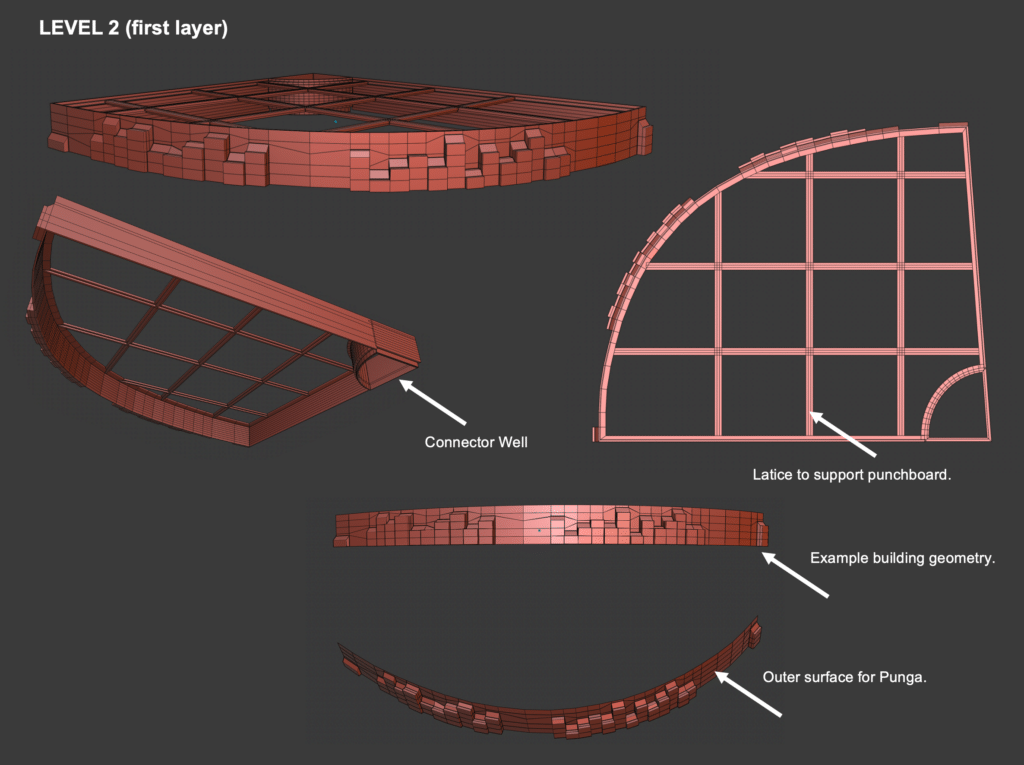
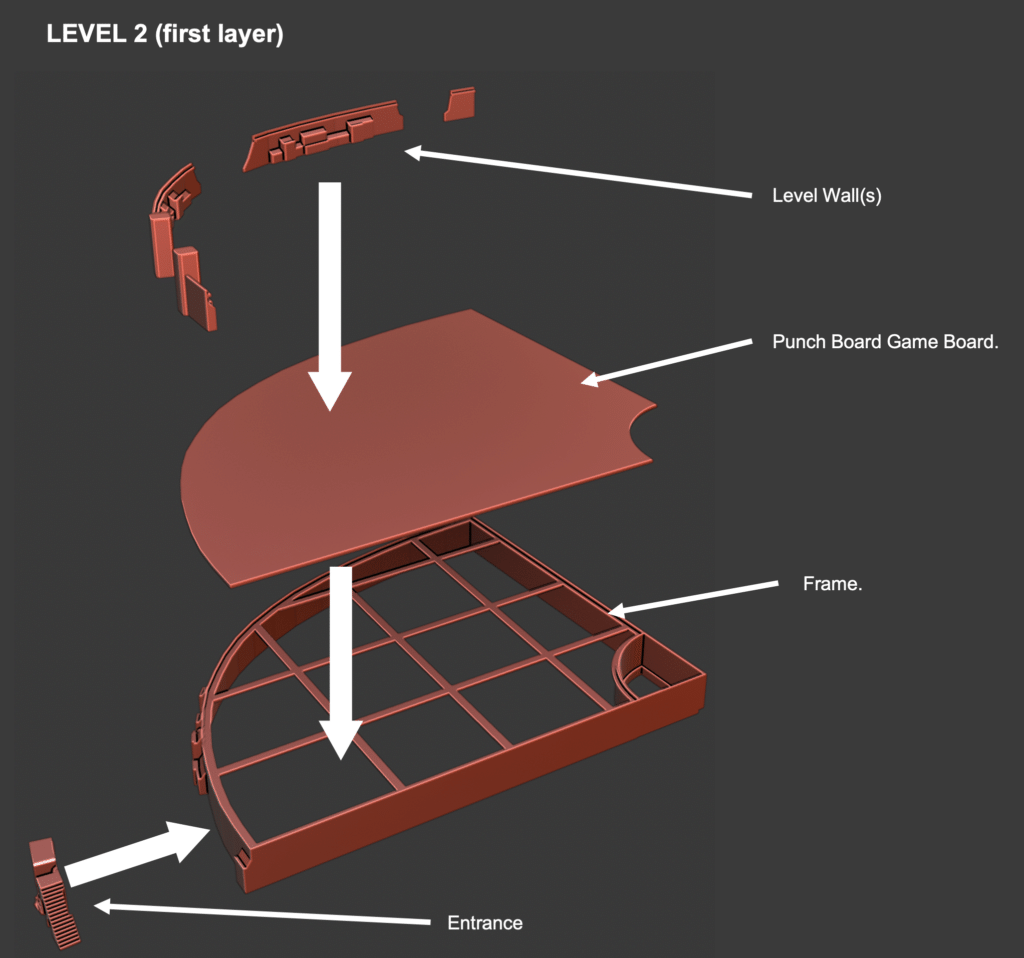
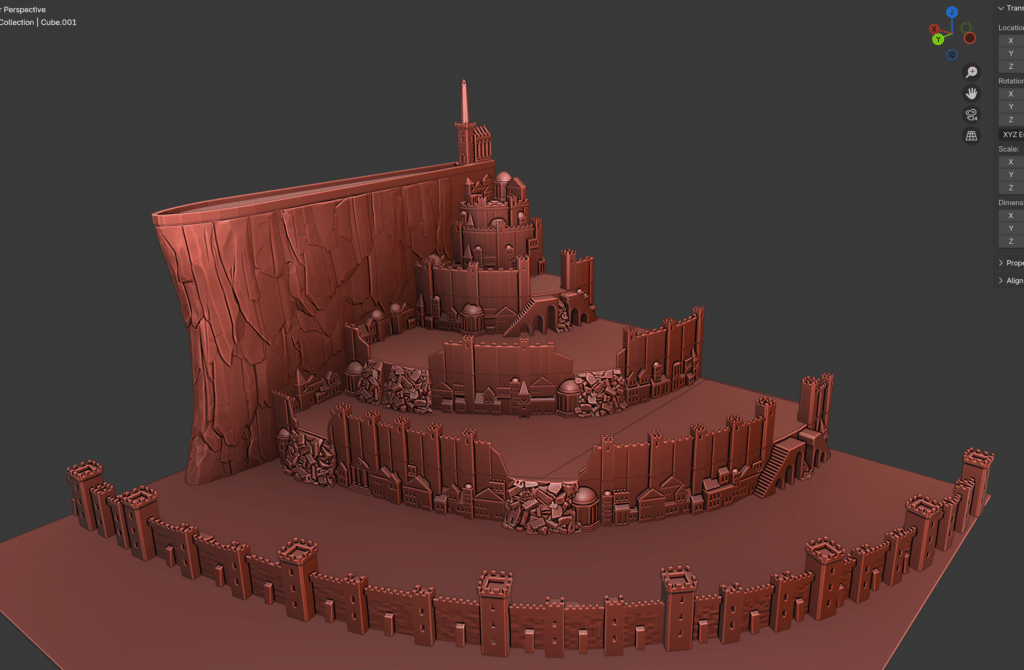
Then finally once everything looks right and feels right, you need to break it all down and figure out what are the component parts, what is it that consumers are taking out of the box, and how does it go together? So it’s a lot of iteration going through a series of improvements until you get to the final pieces you share with the factory.
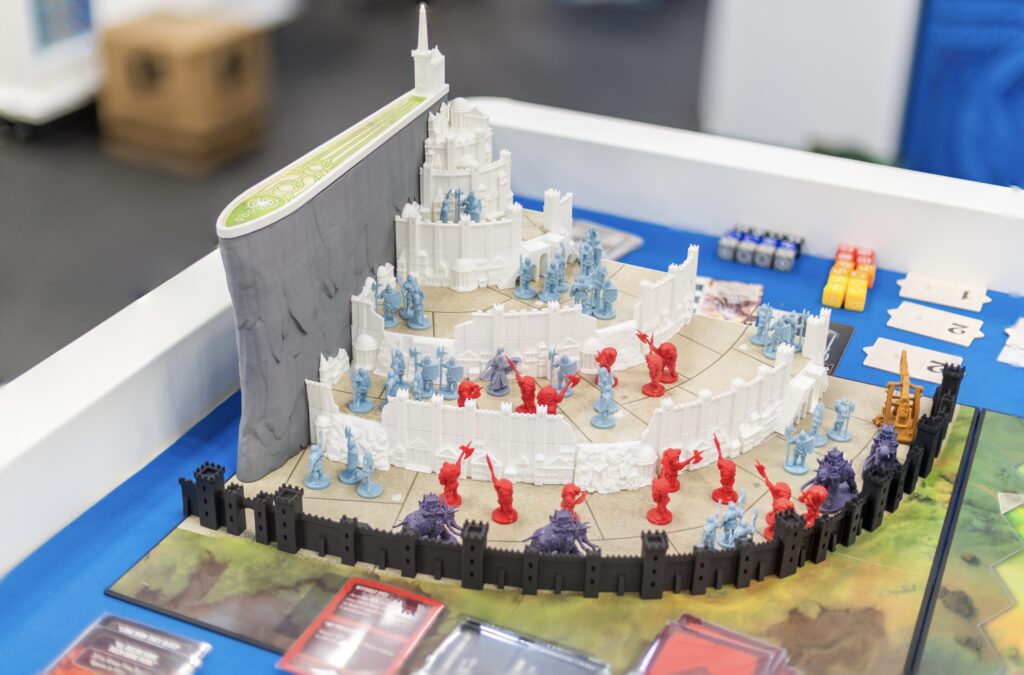
Art and components in progress
What should players look forward to when they open the box?
We want this to feel like a special moment. We want you to open the box and everything is there and ready to play out these epic climactic battles. Particularly with things like Minas Tirith, we want people to be able to take four or five pieces out of the box, nest them on top of each other, and then they’ve got the whole game board. Within 5-10 minutes of opening the box, I want players sitting there looking at The Pellenor Fields, with Mount Doom and Minas Tirith in glorious 3D on either end, and they are eager to play.
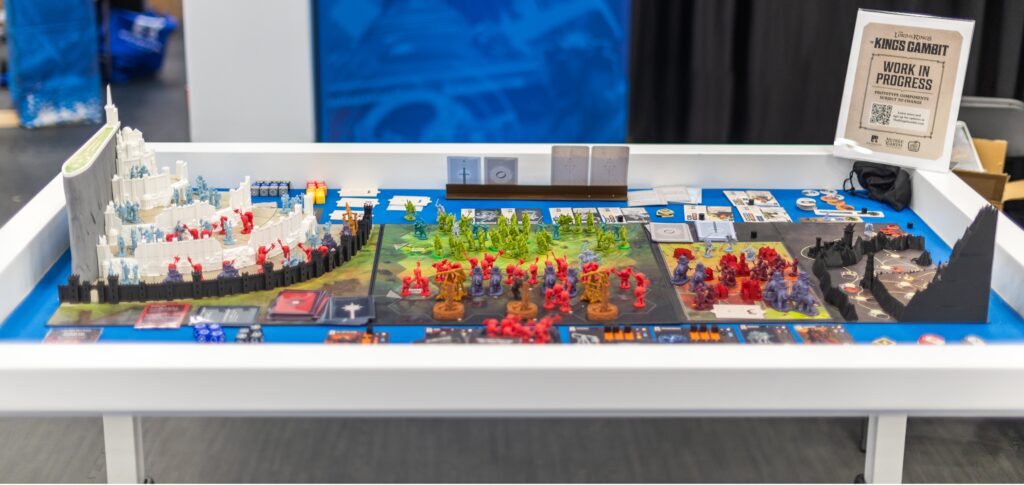
Art and components in progress
As our resident plastic and sculpting expert, let’s dive more into the miniatures. What makes a miniature feel right when you hold it?
Minis serve multiple purposes. On the one hand they need to be playable, so you want to make sure that a miniature has got a silhouette that makes it easy to differentiate it from another character. You want a lot of close-up detail of course, because oftentimes players will want to paint their minis. But then ultimately it also needs to balance with what can be molded and manufactured.
Particularly in this game we also had to navigate disparate scales. So there’s no way we can make a mounted figure exactly the same scale as a foot figure and certainly not at the same scale as Mûmakil or any of the 3D elements. So it’s a matter of finding a series of scales that look comfortable together as a set of playing pieces, but also still giving you the sense that a mounted warrior is more imposing than a foot figure and that the Mûmakil and the siege engines still look ominous for what they are. It’s a delicate balance.
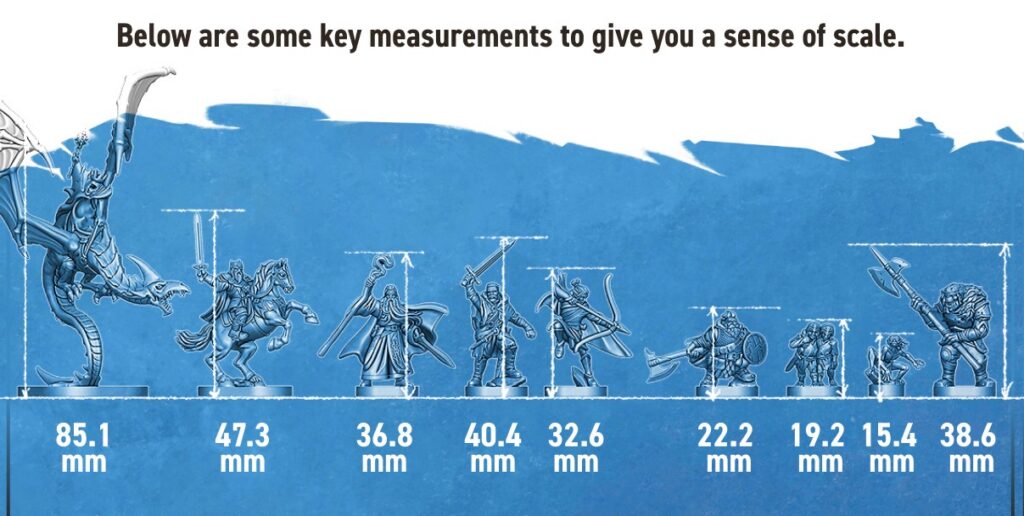
What can be the difference between a good sculpt and a great one?
Everyone will have a slightly different view, but for me the difference between a great sculpt and a good one is knowing where to simplify. It’s very easy, and it’s tempting, and with today’s technology it is very possible to add just lots and lots of extra detail. But when you add too much detail you lose some of the read on a figure. So, in my mind, the real artistry for a good tabletop figure is to understand what is important, what makes this character who they are, and to focus on that and not get too much in the weeds with a lot of excessive detail that distracts from the overall look of the mini.
How do you balance detail with durability?
There are certain types of detail that will survive all the usual rigors of play. Then there are other details that because of the assembly and disassembly of components or because of how they’re used during the course of a game, could be prone to breakage. So typically we’ll look to improve the robustness of the miniature or component, thickening plastic or changing a pose, and sometimes that does impact the aesthetic. But it’s always a balance trying to optimize the look and the functionality.
Finally, what’s one small detail that you really love?
One great small detail, when you look inside the three-dimensional pieces of Mordor you can actually see inside the cave at the top. We’re going to have a glowing light in there for the Mithril edition to show the fires of Mount Doom. It’s a small but great detail.
—
Thanks Stephen for taking us through the process of the many iterations for the sculpting development. Learn more about The Lord of the Rings™: The King's Gambit and back the campaign here!
Art and Components in progress. TM & © MEE